









Scroll to Top
Share to:
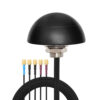
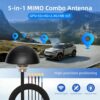
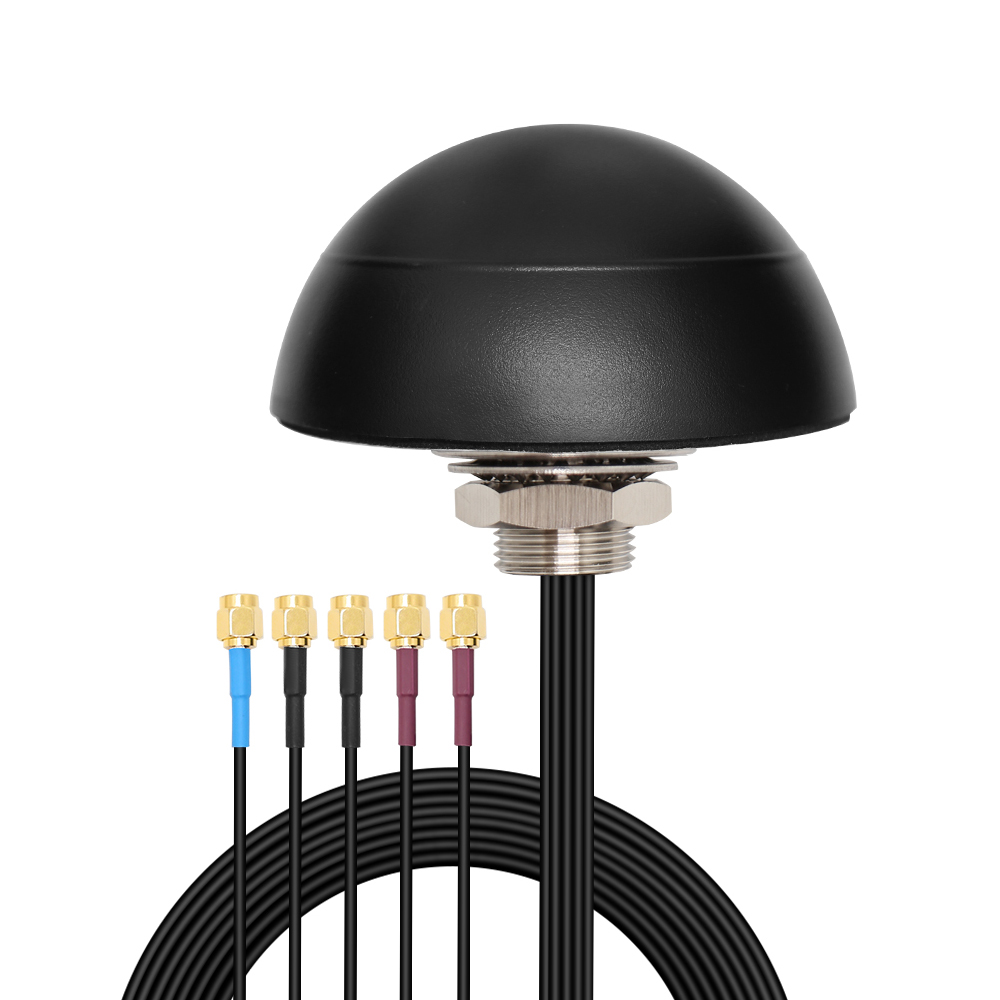
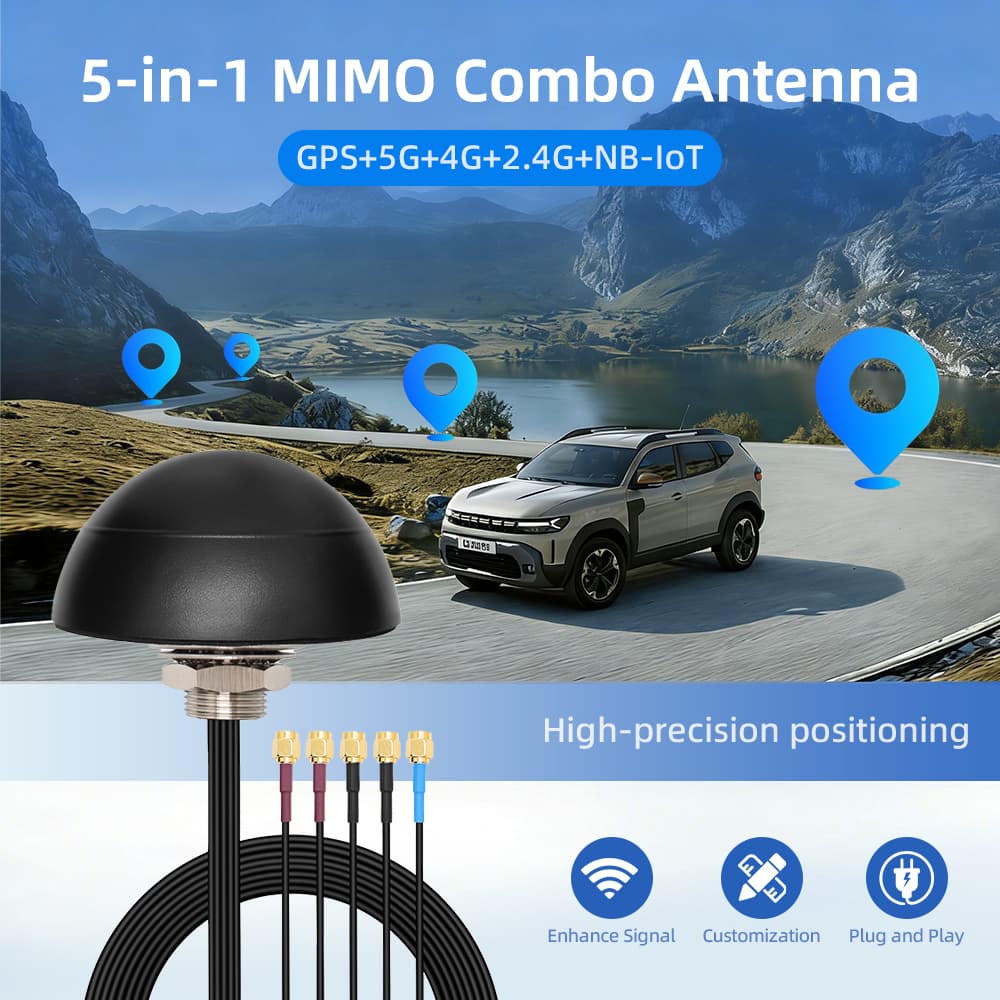
Combo MIMO Mobile GNSS WiFi Roof Antenna 5-in-1
Product features:
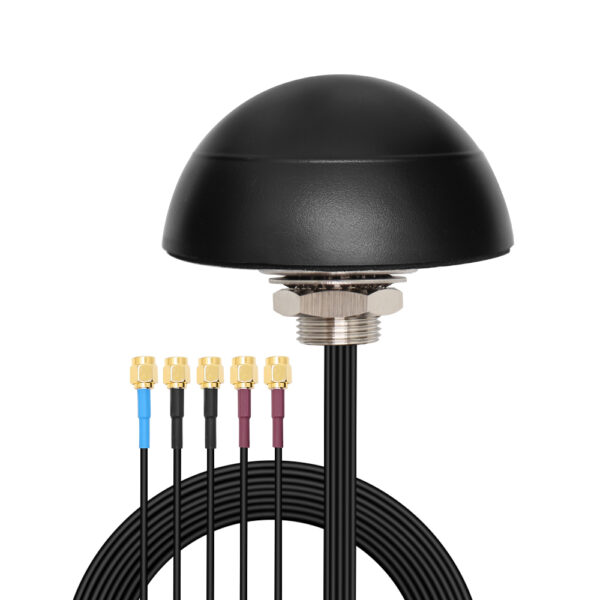
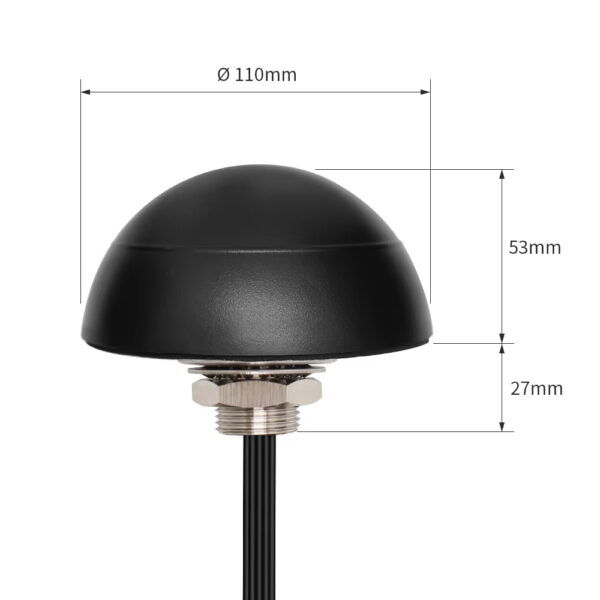
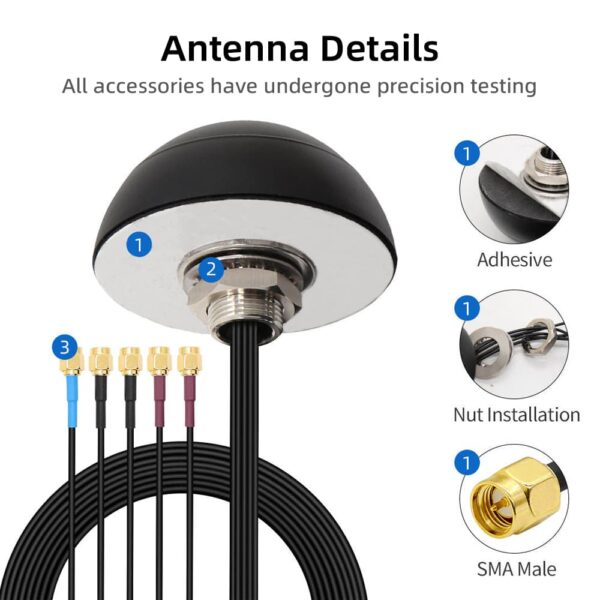
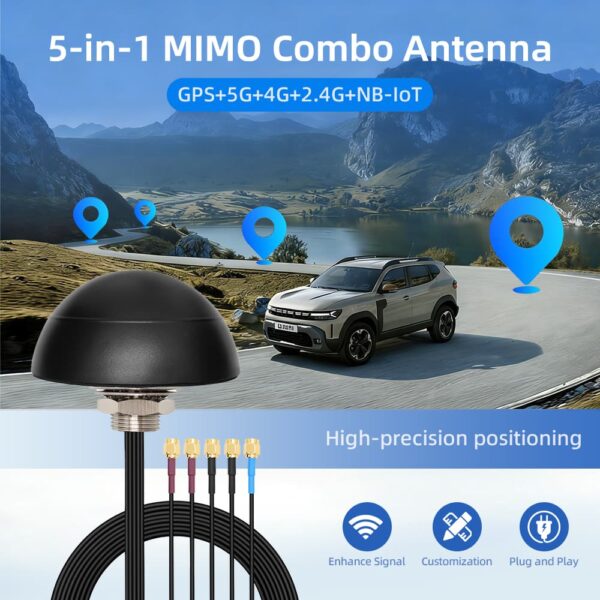
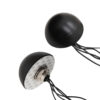
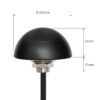
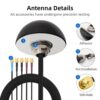
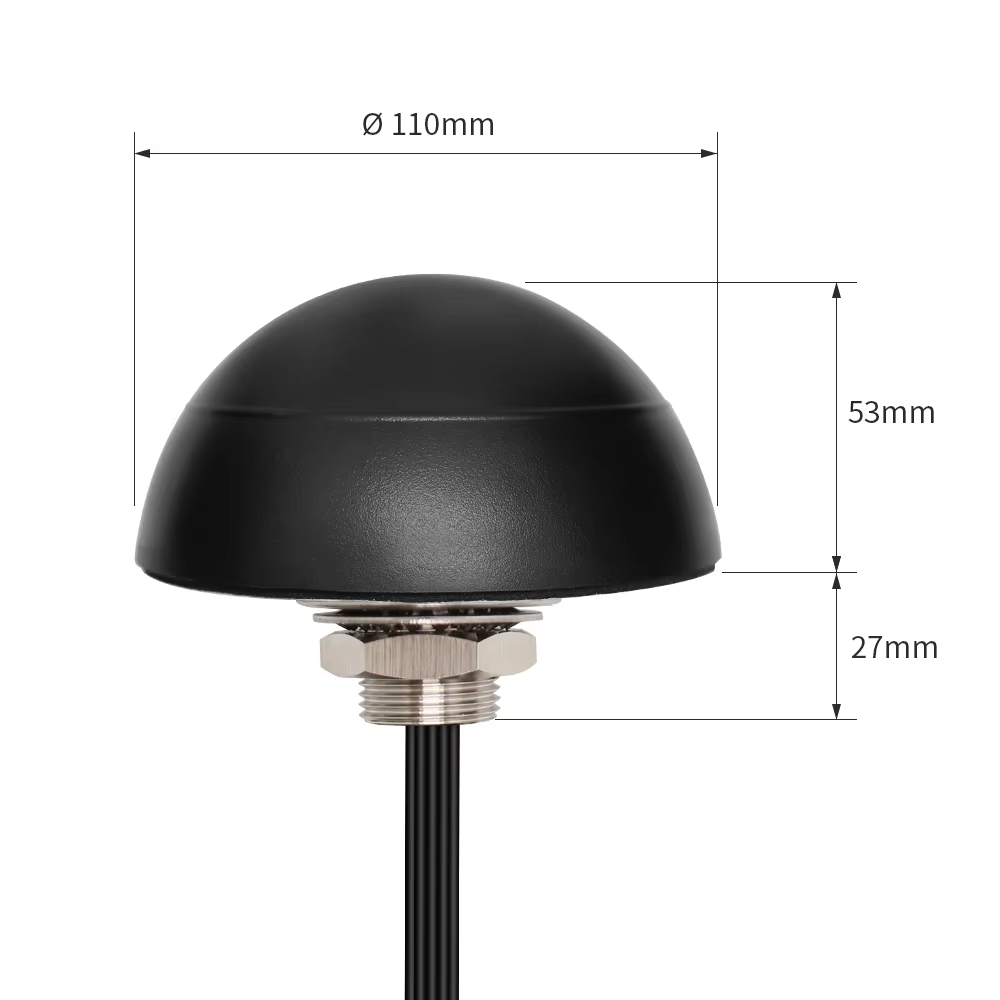
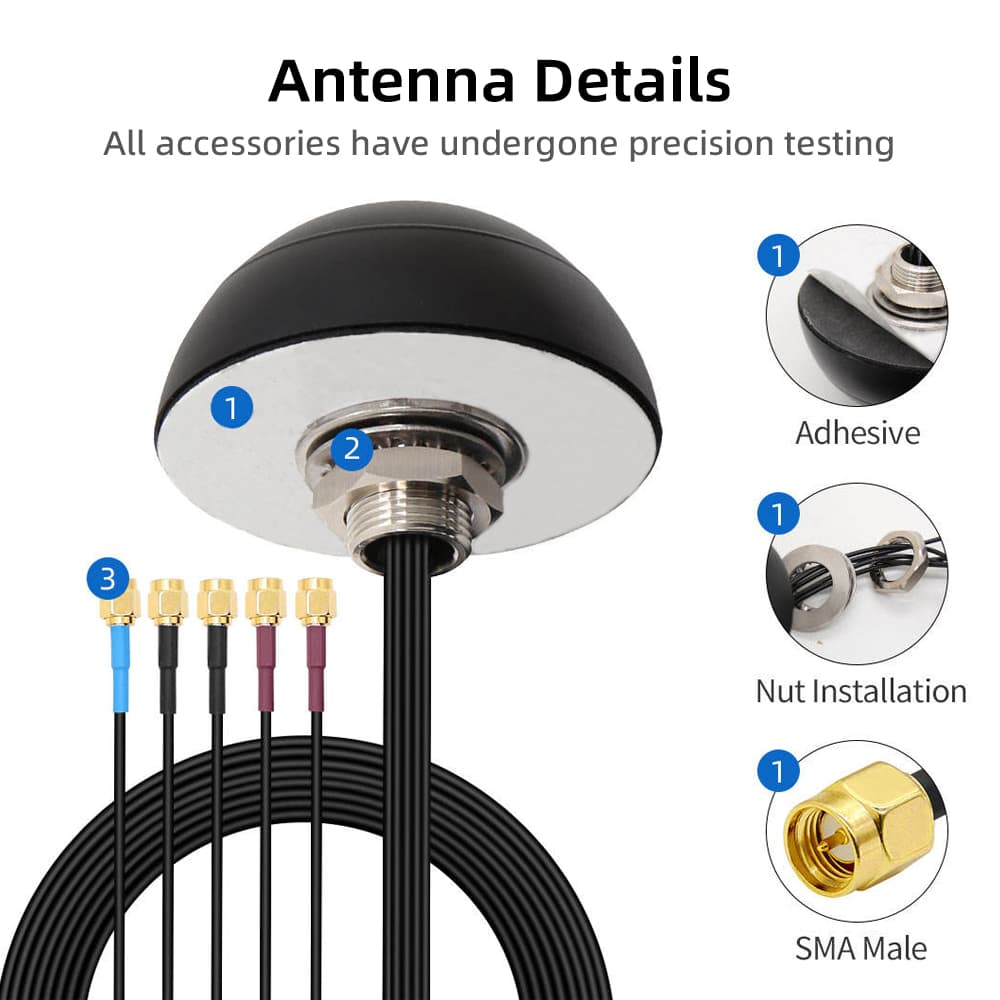
The FS-G26 houses five antenna elements in one compact roof-mounted dome: a 2×2 cellular pair for 4G and 5G NR Sub-6 GHz, an active GNSS element at 1575.42 MHz, a 2.4 GHz WiFi element and an NB-IoT element. All five cables exit through a single threaded mounting stud, keeping roof installation simple with just one mounting hole. The cellular, WiFi and NB-IoT elements typically provide around 3 dBi gain, while the GPS element uses a built-in LNA with approximately 28 dB gain. We can adjust the frequency bands, cable lengths and connectors (SMA, FAKRA or N-type) to fit your equipment. For fleet vehicles running routers, trackers and cameras, this Vehicle Tracking Antenna offers a practical way to combine several wireless connections in one housing. The MIMO combo antenna can also be configured for selected frequency bands, including 617 MHz and 3.8 GHz. Share your equipment’s port layout with us, and we’ll match the cable arrangement to your setup.
| Type | Combo Antenna | Antenna Gain | 28DBI |
| Number Of Bands | Can be customized | Terminals | support customized |
| Installation | can be customized | Connector Type | can be customized |
| Model Number | FS-G26 | Brand Name | support OEM |
| Place of Origin | Guangdong, China | Polarization | vertical |
| Antenna Frequency | Can be customized | Frequency | can be customized |
| Mounting | Adhesive / Magnetic | VSWR | less than 1.5 |
| Applications | 4G /GPS devices | Independence | 50Ω |
Q1. What does each of the five cables connect to, and can we customize the colour coding?
The five cables are assigned to GPS, cellular A, cellular B, WiFi and NB-IoT. Each cable has a moulded boot, with the colour coding confirmed on the product drawing before production. For orders of 20 pieces or more, we can adjust the cable sequence, boot colours and connector type on each lead. Just send us the port layout of your router or head unit, and we can match the cable assembly to your setup.
Q2. The specification table lists 28 dBi gain. Is this the actual antenna gain?
No. The 28 dB figure refers to the GPS element’s built-in LNA gain, not the antenna’s passive gain. A passive gain of 28 dBi would require a much larger antenna structure, which is not what this vehicle-mounted dome uses. The cellular, WiFi and NB-IoT elements are low-gain omnidirectional antennas. When checking link performance, look at the actual antenna gain and account for the installation distance and coaxial cable loss. The GPS LNA figure should not be used as the gain value for the other antenna elements.
Q3. Does the GPS element need external power?
Yes. The GPS element is an active GNSS antenna with a built-in LNA. It draws power from the connected receiver through the coaxial cable, so check the receiver’s datasheet for its bias voltage and current requirements. If you want to connect two devices to one GPS antenna, use an active GNSS splitter with the correct DC-pass and DC-block arrangement. A simple T-connector won’t provide the necessary power isolation. If you share your receiver model or bias specifications with us, we can check the power requirements before production.
Q4. Does the cellular section support true MIMO, or does it split one antenna signal into two?
It uses two independent cellular elements, each with its own feed point and coaxial cable. Neither element shares its RF signal with the other, so both can connect directly to the router’s cellular ports for 2×2 MIMO operation. This is what makes it a MIMO combo antenna, rather than a single antenna with a splitter. If your router uses 4×4 MIMO, you’ll need four independent cellular antenna elements, either across two antennas or in a housing designed for four cellular feeds.
jason@fs-sz.com
+86-13683276589
+86 13427976189
+86-0755-85223189