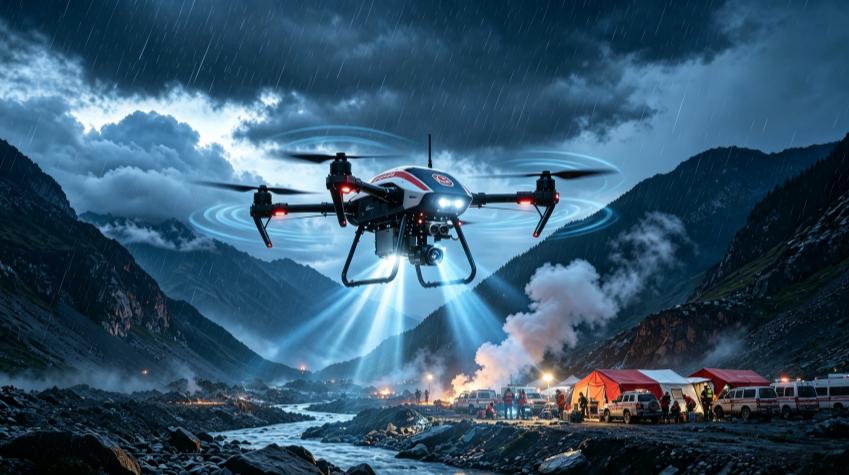




Today, drones have been widely deployed across hundreds of industries, including consumer entertainment, modern agriculture, urban operation and maintenance, security inspection, emergency rescue, and industrial exploration. Evolving from niche professional equipment into mainstream smart devices, they deeply integrate into daily life, support efficient social operation, and drive intelligent upgrading across all sectors. Drones deliver tangible value in every scenario, from daily aerial photography and life recording for ordinary users, to agricultural production improvement, refined urban management, and on-site disaster rescue.
Why Drone Antennas Are Critical to Flight Performance
Most users tend to focus on visible parameters such as pixel resolution, battery life, and flight speed, yet overlook drone antennas — the core component that defines overall equipment performance, flight safety, and user experience. Serving as the drone’s “communication nerve” and “flight lifeline”, antennas undertake full responsibilities for stable remote control signal reception, real-time high-definition image transmission, and accurate navigation data delivery. All flight operations, functional executions, and long-range missions rely entirely on antennas, laying the fundamental foundation for safe and stable drone operation throughout all application scenarios and working processes.
It is fair to say that the performance ceiling, safety baseline, and practical value of a drone are completely determined by its antenna quality. Without a high-performance antenna, even top-tier drone hardware cannot exert its due capabilities.
Stable Communication in Complex Flight Environments
Drones often operate in highly complex environments, where building occlusion, terrain barriers, intensive urban electromagnetic interference, and beyond visual line-of-sight (BVLOS) flight commonly cause signal attenuation and transmission interruption. High-quality drone antennas feature ultra-high signal sensitivity and powerful anti-interference capabilities, breaking environmental limitations and eliminating common faults such as image stuttering, black screen transmission, remote control delay, and drone drift to ensure full-flight stability. In contrast, substandard antennas will first lead to operational interruption, shooting failure, and missing inspection data. In severe cases, they may cause signal disconnection, failed automatic return, runaway drones, and high-altitude crashes, resulting in property losses and potential public safety hazards — fully demonstrating the irreplaceable core status of drone antennas.
Main Types of Drone Antennas
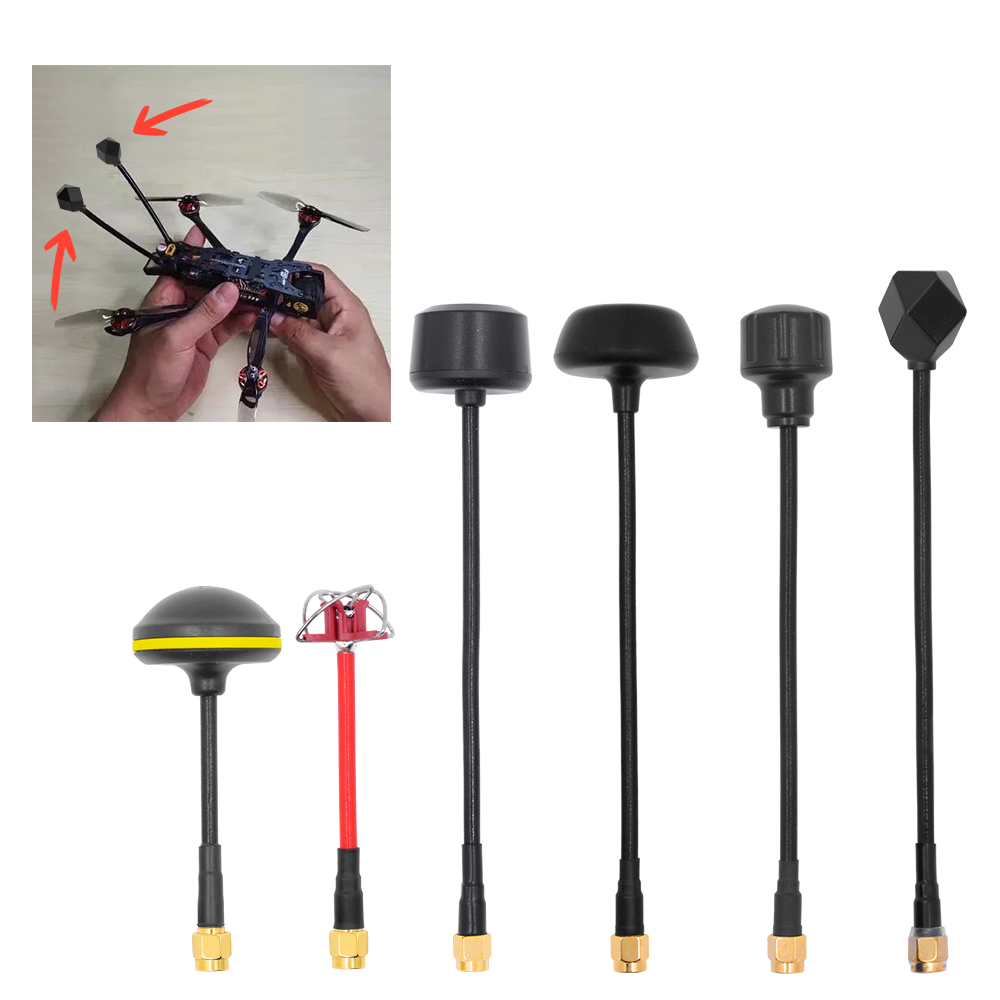
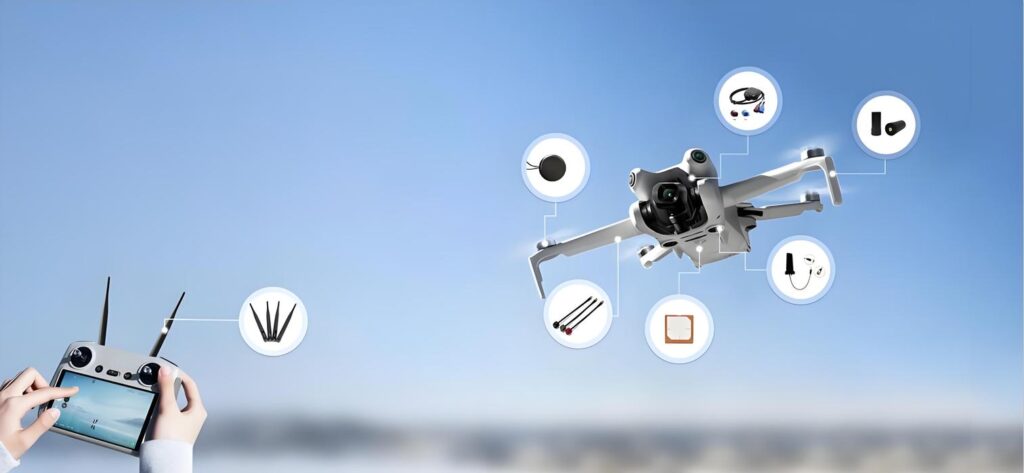
Driven by booming industrial demands, drone antenna technologies have been continuously optimized and diversified. Various types of antennas, including ceramic antennas, rod antennas, spring antennas, and FPC flexible antennas, serve distinct purposes, fully covering micro, small, medium, and large drones to meet all-scenario operational needs and support the large-scale popularization of the drone industry. Traditional rod antennas feature high gain and long transmission range, widely applied to large plant protection and industrial inspection drones for large-scale outdoor operations. Ceramic antennas deliver precise positioning and stable high-frequency performance, serving as the standard core of drone GPS and Beidou navigation modules to achieve zero-deviation flight positioning. With the popularization of consumer drones and the mainstream trend of miniaturization and lightweight design, FPC flexible antennas have stood out with unique differentiated advantages. Featuring an ultra-thin, bendable design that allows embedded fitting installation without damaging the drone’s structure and appearance, combined with high temperature resistance, vibration resistance, stable high-frequency performance, and strong anti-interference capability, FPC flexible antennas perfectly match the design requirements of compact aerial drones and portable industrial drones, becoming the most widely applicable and compatible drone antenna solution on the market.
Drone Antenna Applications Across Industries
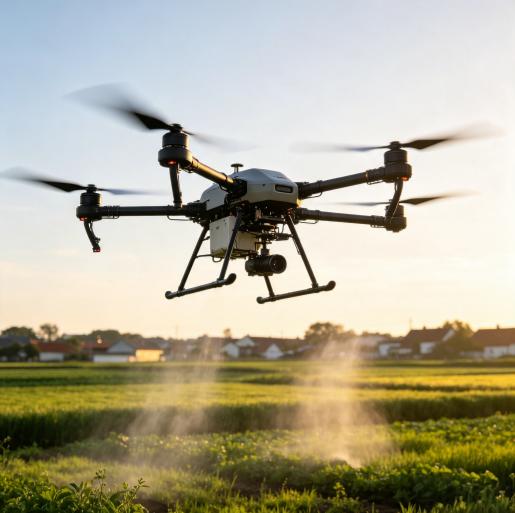
As the core communication carrier of drones, antenna stability and compatibility directly determine the operational effectiveness of drone applications across all industries, boasting extremely wide coverage and outstanding practical value. In the consumer sector, stable antenna signals support aerial photography, landscape shooting, and short-video creation, enabling users to capture high-definition, lag-free aerial footage over long distances and enrich daily entertainment experiences. In modern agriculture, plant protection drones rely on reliable antenna communication to conduct large-scale farmland inspection, precision spraying, and fertilization, breaking the limitations of manual labor, greatly improving agricultural productivity, and empowering the upgrade of smart agriculture. In smart urban operation, drones leverage the long-range stable transmission performance of high-quality antennas to conduct routine inspections of roads, river water quality, illegal constructions, and power pipelines, replacing high-risk and low-efficiency manual work and becoming an intelligent tool for refined urban management.
Drone Antennas for Emergency Rescue and Safety
Most importantly, the critical value of drone antennas is further amplified in life-saving scenarios such as emergency rescue and disaster prevention and mitigation, making them indispensable rescue tools. Mountain search and rescue, flood disaster relief, forest fire inspection, and ruin exploration feature complex terrain, severe signal occlusion, and chaotic electromagnetic interference, bringing high risks and limited vision for manual rescue. Drones equipped with high-performance antennas can break terrain and environmental restrictions, realizing stable BVLOS flight, real-time high-definition on-site video feedback, and accurate trapped personnel positioning. They provide precise data support for rescue teams, greatly shortening rescue time, reducing operational risks, and improving rescue success rates, building a solid communication guarantee for life safety.
The Future of Drone Antenna Technology
In summary, despite their compact and invisible appearance, drone antennas are essential core components that run through all drone types, application scenarios, and functional uses, serving as the cornerstone of drone-based entertainment creation, industrial empowerment, and safe operation. Without high-quality antennas, all advanced parameters, intelligent functions, and industrial value of drones cannot be realized. As the drone industry advances toward miniaturization, intelligence, high-definition imaging, and widespread popularity, FPC flexible antennas — with stronger compatibility, more stable performance, superior anti-interference ability, and full-scenario adaptability — have become the mainstream industry choice. In the future, continuously upgraded FPC flexible antennas will empower consumer entertainment, industrial operation, smart agriculture, emergency security, and other fields, further expanding the application boundaries of drones and consistently facilitating convenient daily life, industrial intelligent transformation, and stable and efficient social operation.